What It Means When You Have Flying Ants in Your Home
Proudly Serving South Carolina | North Carolina | Georgia | Florida
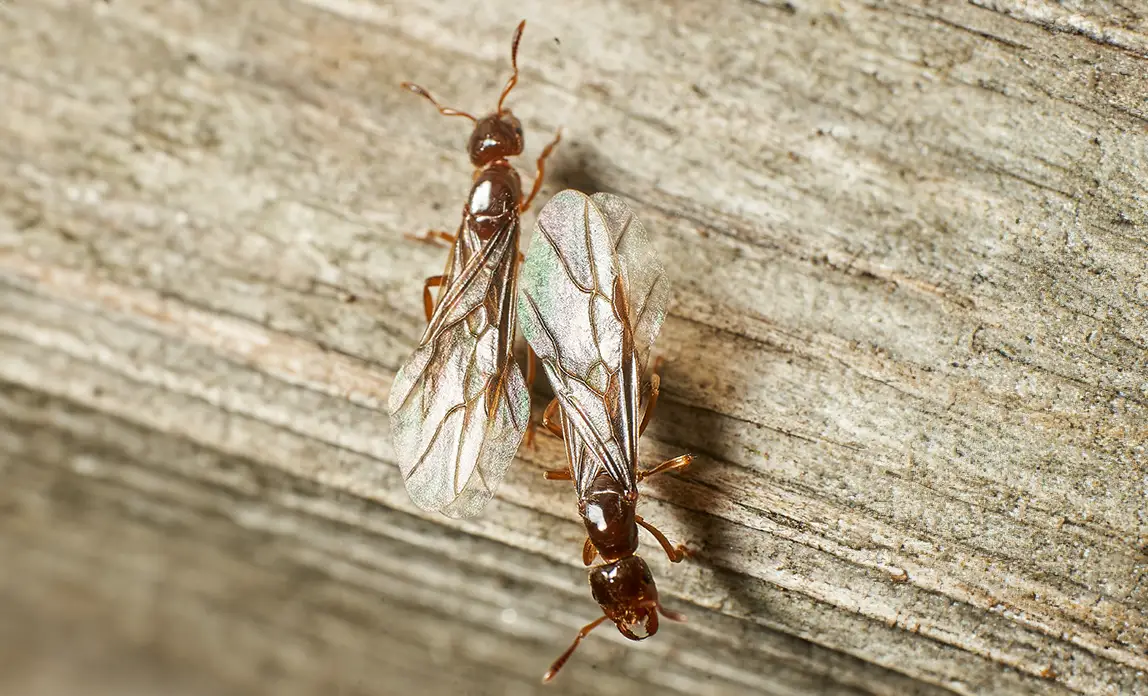
Seeing flying ants inside your home can be alarming, especially because they are often mistaken for termite swarmers. Flying ants are not a separate species. They are reproductive male and female ants that develop wings and leave established colonies to mate and potentially start new colonies.
A few flying ants may have entered from outdoors, but repeated sightings or a large swarm indoors can indicate an established ant colony in or near the structure.
What Are Flying Ants?
Flying ants, also called ant swarmers or alates, are the reproductive members of an ant colony. During certain times of year, they leave mature colonies in large numbers to mate. Afterward, fertilized queens look for suitable places to establish new colonies.
Because many ant species produce winged reproductives, identifying the species can help determine whether the swarm is simply a nuisance or a sign of a larger pest problem.
How to Get Rid of Flying Ants
If flying ants are appearing inside your home, start by determining whether they are ants or termites and where they may be coming from.
- Remove visible swarmers: Vacuum or remove flying ants you find indoors and monitor the area for additional activity.
- Look for the source: Repeated swarms near windows, walls, doors, or other areas may indicate a colony nearby.
- Seal entry points: Check around windows, doors, foundations, and utility openings for cracks or gaps.
- Reduce food and moisture: Store food securely, clean up crumbs and spills, and repair plumbing leaks or other moisture problems.
- Get professional identification when needed: Large or recurring indoor swarms should be inspected to determine the species and whether treatment is necessary.
Common Types of Flying Ants in the Southeast
Many ant species found throughout the Southeast produce winged reproductive ants. Some of the species homeowners may encounter include:
- Carpenter ants: Large winged carpenter ants emerging indoors can be a sign of a mature colony in or near the structure. Carpenter ants excavate wood to create nesting galleries but do not eat wood like termites.
- Fire ants: Mature fire ant colonies produce winged males and females that swarm during reproductive periods.
- Pavement ants: Winged pavement ants may swarm from colonies around foundations, pavement, and other areas near structures.
- Odorous house ants: Mature colonies may also produce winged reproductives, although workers are more commonly noticed indoors.
Should You Be Concerned About Flying Ants?
Flying ants themselves are usually more of a nuisance than a direct threat. The bigger concern is what their presence may tell you about an established colony nearby.
It is also important to make sure the insects are actually ants. Flying ants and termite swarmers can look similar, and termite activity requires a very different treatment approach. If you find a large indoor swarm and are unsure which pest you have, professional identification is worthwhile.
What’s the Difference Between Flying Ants and Termites?
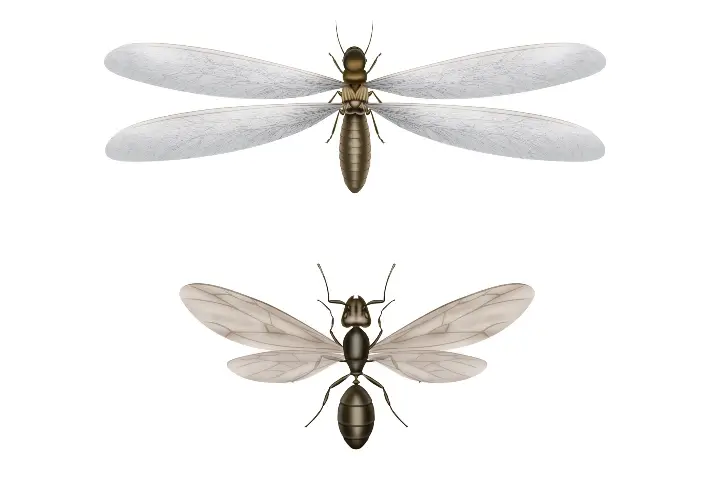
Flying ants and termite swarmers have several visible differences:
- Waist: Ants have a narrow, pinched waist, while termites have a broader, more uniform body.
- Wings: Flying ants have front wings that are longer than their rear wings. Termites have four wings that are approximately equal in length.
- Antennae: Ants have bent or elbowed antennae, while termite antennae are straighter and bead-like.
For a more detailed comparison, read How to Tell the Difference Between Termites and Ants.
Not Sure if You Have Flying Ants or Termites?
If winged insects are repeatedly appearing inside your home, Rocket Pest Control can help identify whether you’re dealing with ants or termites and recommend the appropriate next step.
We provide professional ant control and termite control across South Carolina, North Carolina, Georgia, and Florida.
Need help identifying flying insects in your home? Contact Rocket Pest Control for a free estimate.
Back to Ant Exterminators