
Why Are My Palm Fronds Turning Brown?
Proudly Serving Georgia & Florida

Brown or yellow palm fronds do not always mean your tree is unhealthy. Older fronds naturally decline as palms produce new growth, but widespread discoloration, damaged new leaves, or changes throughout the canopy may indicate a nutrient, watering, pest, disease, or environmental problem.
Common reasons palm fronds turn brown include:
- Normal Aging: Older, lower fronds naturally turn brown as part of the palm’s growth cycle.
- Nutrient Deficiencies: Potassium, magnesium, manganese, and other nutrient deficiencies can cause distinctive yellowing, spotting, browning, or distorted growth.
- Watering & Drainage Problems: Both excessive moisture and prolonged dry conditions can stress palm roots and affect foliage.
- Cold Damage: Frost and sudden cold temperatures can damage palm foliage, especially on less cold-tolerant species.
- Pests or Disease: Certain insects and palm diseases can contribute to browning, canopy decline, or damaged new growth.
Because several palm problems can produce similar symptoms, identifying where the browning appears and which fronds are affected can help narrow down the cause.
5 Possible Reasons Your Palm Fronds Are Turning Brown
1. Normal Palm Frond Aging
Some browning is completely normal. As palms produce new leaves from the center of the canopy, their oldest lower fronds gradually decline.
If browning is limited primarily to the oldest fronds while new growth remains healthy, the palm may simply be going through its normal growth cycle.
Avoid removing healthy green fronds unnecessarily. When pruning is needed, focus on fronds that are completely brown or dead.
2. Nutrient Deficiencies
Palms have specific nutritional requirements, and deficiencies can produce recognizable patterns in the foliage. The location and appearance of the symptoms often provide clues about which nutrient may be involved.
- Potassium Deficiency: Usually appears first on older fronds and may cause yellow, orange, or brown spotting, scorched-looking leaf edges, or frizzled tips.
- Magnesium Deficiency: Often causes broad yellow bands along the outer edges of older or mid-canopy fronds while the center remains greener.
- Manganese Deficiency: Commonly affects new growth and can cause small, weak, yellowed, or frizzled emerging leaves — a condition often called “frizzle top.”
Because different nutrient problems can look similar, applying fertilizer without properly identifying the deficiency may not correct the issue.
3. Too Much or Too Little Water
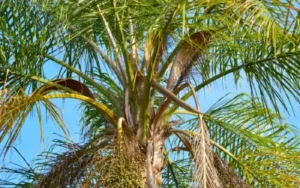
This queen palm has some brown fronds while the rest of the canopy appears relatively healthy.
Palm roots need an appropriate balance of moisture and drainage. Soil that remains saturated for extended periods can interfere with healthy root function, while prolonged dry conditions can also stress the palm and contribute to browning foliage.
If several palms or landscape plants are showing similar symptoms, irrigation coverage, drainage, rainfall, or other environmental conditions may be worth evaluating.
4. Cold or Frost Damage
Cold weather can cause palm leaves to develop brown, black, or scorched-looking areas after frost or freezing temperatures. The extent of damage depends on the palm species, temperature, duration of the cold event, and overall condition of the tree.
Cold-damaged fronds do not necessarily mean the entire palm is lost. New growth may emerge if the growing point remains healthy.
5. Palm Pests or Disease
Insects and plant diseases can also contribute to palm discoloration and canopy decline. Because brown fronds alone cannot identify a specific pest or disease, look for additional symptoms such as damaged new growth, visible insects, spotting, trunk changes, or rapid canopy decline.
Potential concerns may include:
- Palmetto Weevils: These large weevils may attack stressed or damaged palms and can affect growth near the crown.
- Mites and Other Palm Pests: Feeding activity may cause stippling, discoloration, or deterioration of the foliage depending on the pest involved.
- Ganoderma Butt Rot: This serious fungal disease affects the lower trunk and may cause general decline, wilting, or excessive lower-frond death. A shelf-like fungal growth, called a conk, may eventually appear near the base of an infected palm.
- Lethal Bronzing: In areas where the disease occurs, susceptible palm species may develop progressive discoloration and canopy decline. Laboratory testing may be needed to confirm the disease.
Trust Your Local Lawn Care Services
Click below to get a FREE custom lawn care quote.
When Are Brown Palm Fronds a Cause for Concern?
A few completely brown lower fronds may simply be part of normal palm growth. A professional evaluation may be worthwhile when you notice:
- Browning or yellowing moving into newer fronds.
- Distorted, undersized, or frizzled new growth.
- A rapidly thinning canopy.
- Sudden widespread discoloration.
- Visible insects or significant foliage damage.
- Unusual growths or deterioration around the trunk.
- Multiple symptoms appearing at the same time.
Identifying the underlying cause is important because nutrient deficiencies, pest problems, disease, cold injury, and irrigation issues require different responses.
Brown Palm Frond FAQs
Professional Palm Tree Care in Georgia & Florida
If your palm fronds are turning brown and you’re not sure why, Rocket Pest Control can evaluate the visible symptoms and conditions affecting your palms.
Our palm tree care services in Georgia and Florida may include fertilization, nutrient management, pest control, and other care based on the palm species and conditions present.
Concerned about your palm trees? Contact Rocket Pest Control today to schedule an evaluation and request a free estimate.
Need help with the rest of your landscape? Explore our shrub care and lawn care services in Georgia and Florida.
Back to Lawn Care Services