Common Ant Types

Proudly Serving South Carolina | North Carolina | Georgia | Florida
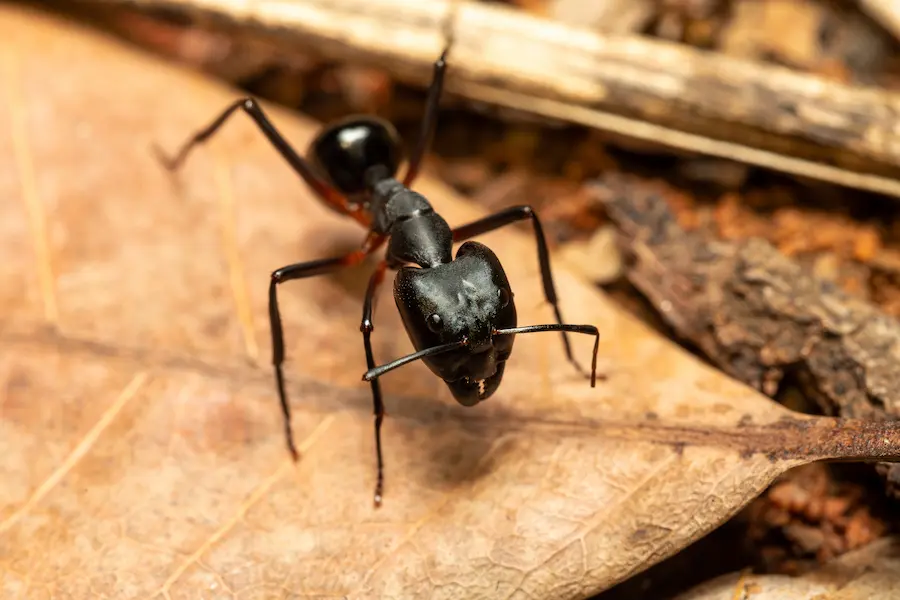
closeup of carpenter ant walking across a leaf, when identifying the ant type

Are you tired of seeing ants marching through your home? You’re not alone! When it comes to household pests, ants top the list as one of the most frequently encountered nuisances across the country. But once you have ants within your home, it’s important to begin treating the infestation quickly. 

The first step in treating ants is to identify the type of ants that have taken up residence in your home. Most ants share the same general body structure, but can be differentiated by size and color.

At Rocket Pest Control, we know how annoying and worrying an ant problem can be. That’s why we’re here to help you understand these pests and get your home back to normal. So let’s learn about the different ant species and how to deal with them.

Need Help Identifying Ants in Your Home?

Schedule an inspection

Types of Ants in the Southeastern United States

Ants can be a frustrating pest to deal with. The best way to quickly and effectively treat them within your home is to identify the type of ant you are dealing with. Different ant species need different treatments. Ants can be easily identified by their three main body structures, which consist of the head, thorax, and abdomen

Each ant species presents different concerns. Odorous house ants can contaminate stored food, while carpenter ants may damage wood as they excavate galleries for nesting. Because ant species and activity vary across the Southeast, proper identification is an important first step in choosing the right treatment approach.

Carpenter Ants

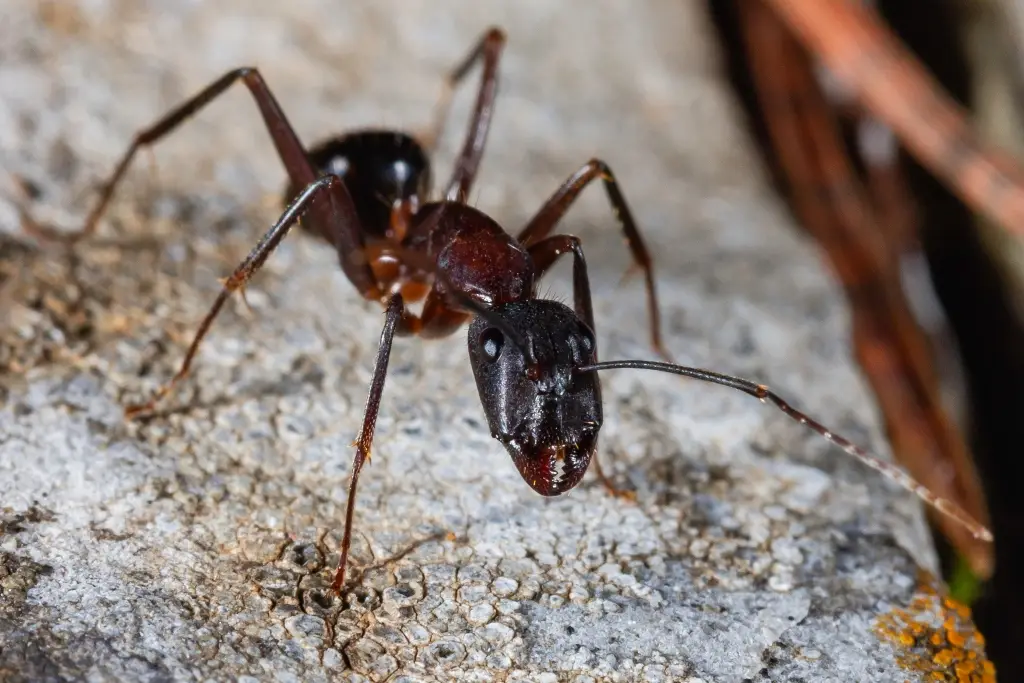
Macro shot of a large carpenter ant with a black head and dark reddish-brown body standing on a rough grey stone.

Carpenter ants are among the largest pest ants found in the Southeast, with workers commonly ranging from about ¼ to ½ inch long. Unlike termites, carpenter ants do not eat wood. Instead, they excavate wood to create nesting galleries, which can lead to damage over time.

Carpenter ants are often drawn to moist or damaged wood but may also tunnel into sound wood. Common nesting areas include wall voids, porches, doors, ceilings, and other wooden structures. Signs of an infestation may include sawdust-like debris, rustling sounds inside walls, or large ants foraging indoors, especially at night.

Close-up of a dark, long-legged crazy ant carrying a small winged fly across a bright green leaf.

Tawny crazy ants are small, reddish-brown ants known for their rapid and erratic movements. They can form very large, interconnected colonies with multiple queens, allowing populations to spread across multiple properties.

These ants typically nest outdoors in moist, protected areas beneath leaf litter, landscape debris, stones, potted plants, and similar locations. They may also invade structures and are known to infest electrical equipment, where heavy activity can contribute to equipment problems. Large infestations can be difficult to control and may require an integrated pest management approach.


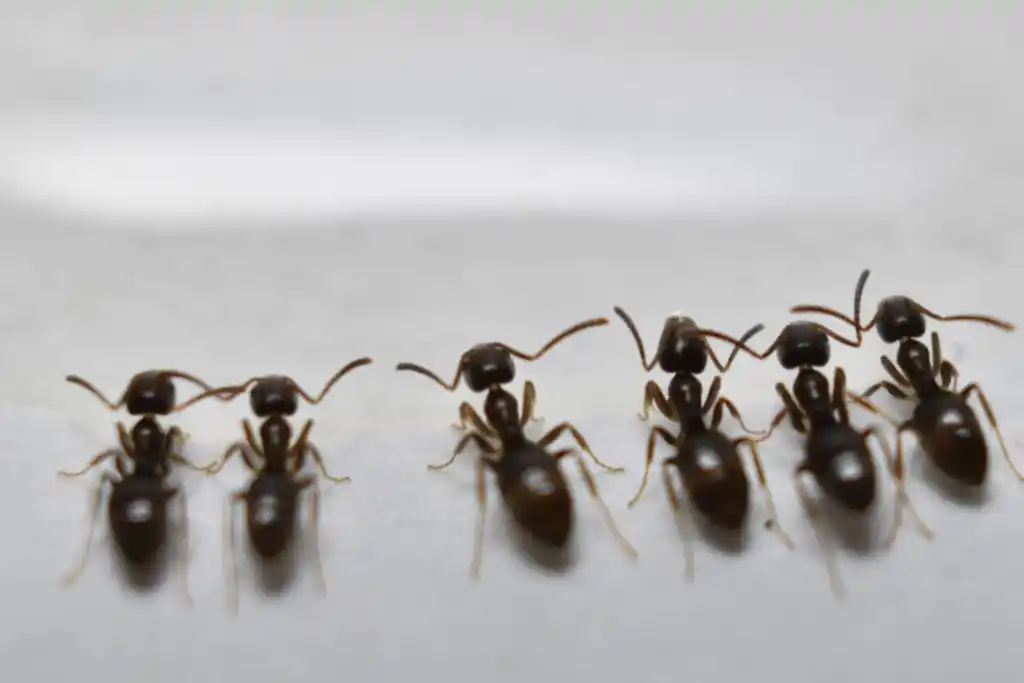
Line of five dark brown odorous house ants walking together across a smooth white surface.

Odorous house ants are small (about ⅛ inch long), and dark brown to black in color. They get their name from the strong, rotten coconut-like odor they emit when crushed.  While they don’t cause structural damage, they can be a persistent nuisance in homes.

They are attracted to sweet foods and can quickly form trails to food sources.  Odorous house ants are known for their ability to form large colonies with multiple queens, making them challenging to control once established. These ants nest both indoors and outdoors, often in wall voids, under floors, or in decaying wood.

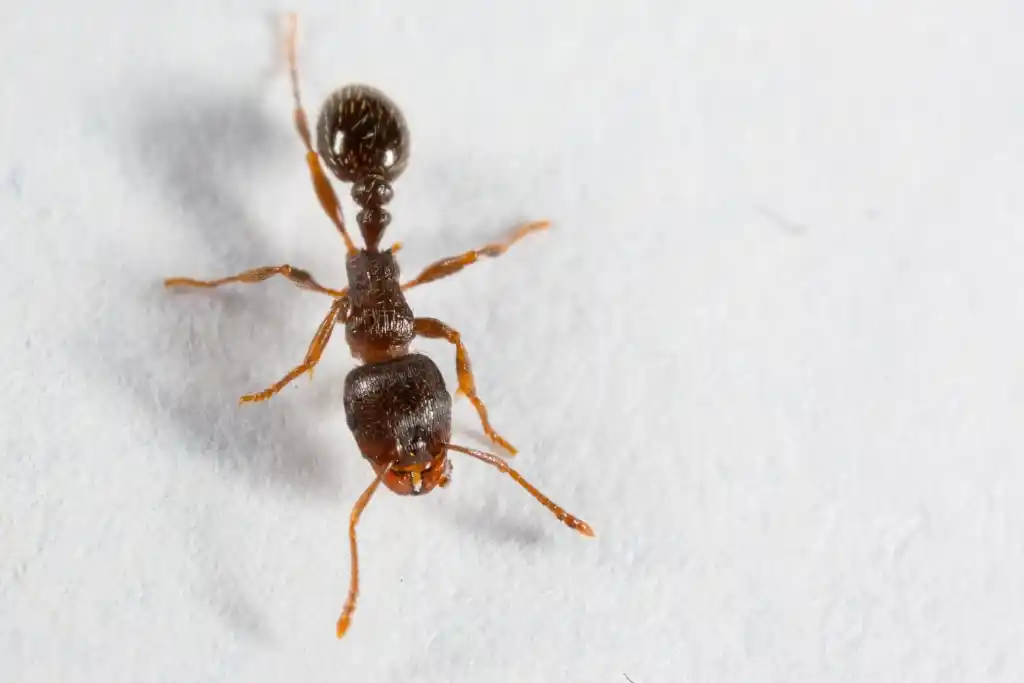
Top-down view of a dark brown pavement ant with visible head grooves, isolated on a white background.

Pavement ants are black to reddish black and are very small compared to fire or carpenter ants. Even though they are more of a nuisance and are not usually harmful to people or their homes, an infestation can be extremely frustrating.

A pavement ant infestation can occur when a worker finds a food source in a home, such as pet food or sweets, and leads others from the colony to the food source. These ants are found on patios, driveways, and sidewalks.

Macro shot of a red imported fire ant standing on a light-colored, textured concrete or stone surface.

Several fire ant species occur in the Southeast, but the red imported fire ant is one of the most common and troublesome. These reddish-brown ants vary in size and typically build mounds in sunny, disturbed areas such as lawns, parks, roadsides, and other open spaces.

When a colony is disturbed, fire ants can respond aggressively and deliver multiple painful stings. Their stings commonly cause burning, itching, swelling, and raised welts or pustules, and some people may experience severe allergic reactions. Active fire ant colonies around homes and frequently used outdoor areas should be addressed promptly.

Profile view of a red and black formica field ant isolated on a stark white background.

Formica, or field ants, generally range from about 4 to 8 mm in size and may be red, brown, yellow, black, or a combination of colors. They typically live outdoors in open soil, grassy areas, and around dead wood. Many field ants feed on honeydew produced by aphids and other insects and are much less likely than common household ants to establish nests inside a home.

Field ants do not sting, but they can bite when disturbed and may release formic acid, which can cause irritation. If field ants are repeatedly entering your home or a large colony is creating problems around the property, professional identification can help locate the nesting area and determine the appropriate treatment.

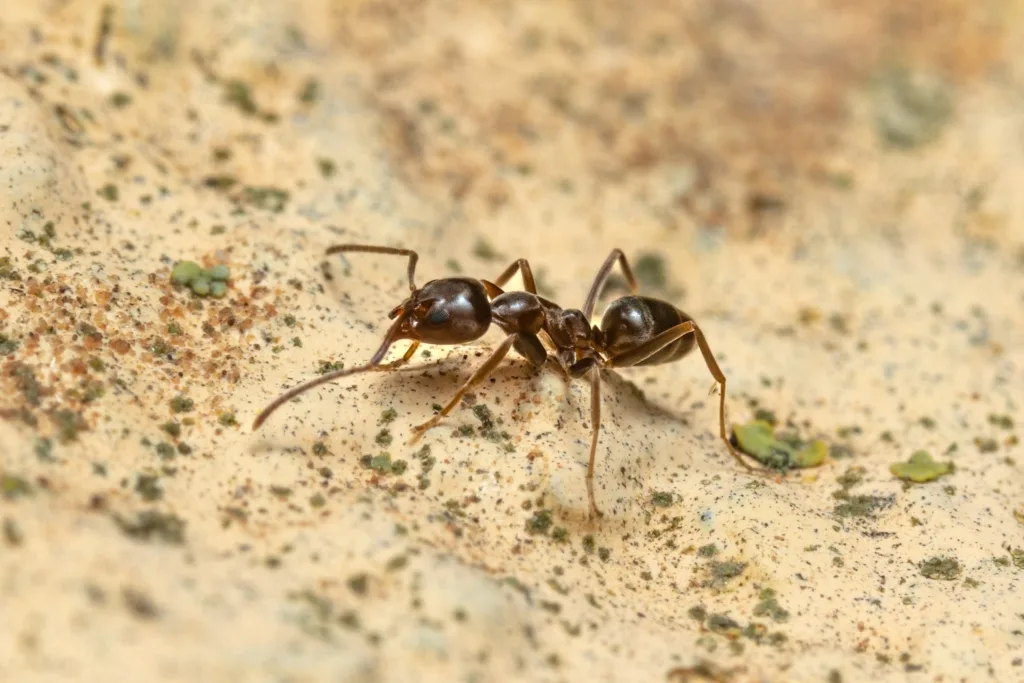
Close-up of a dark brown Argentine ant crawling across a textured, light beige, sandy surface.

Argentine ants are found throughout the Southeastern United States, but they’re not dangerous to humans. That’s because they’re unable to sting, and can only bite. Their bites aren’t pleasant, but they’re less intense than bites from some other ant species (such as fire ants).  

Like any other type of ant, getting rid of an Argentine ant infestation on your own can be a challenge. Using a professional ant control service is usually your best option. These ants are usually found between walls, ceilings, and floors.

Several dark rover ants tending to large, round scale insects on a textured tree branch.

Rover ants typically nest outdoors in soil or mulch, but can establish satellite colonies indoors. They are known for their erratic foraging patterns, making them difficult to track. Rover ants are tiny (only about 1/16 inch long), and dark brown to black in color.  While they don’t cause structural damage, they can be a persistent nuisance in homes and buildings. 

These ants are attracted to moisture and are often found near water sources or in areas with high humidity. Signs of a rover ant infestation include trails of tiny ants along baseboards, windowsills, or countertops.

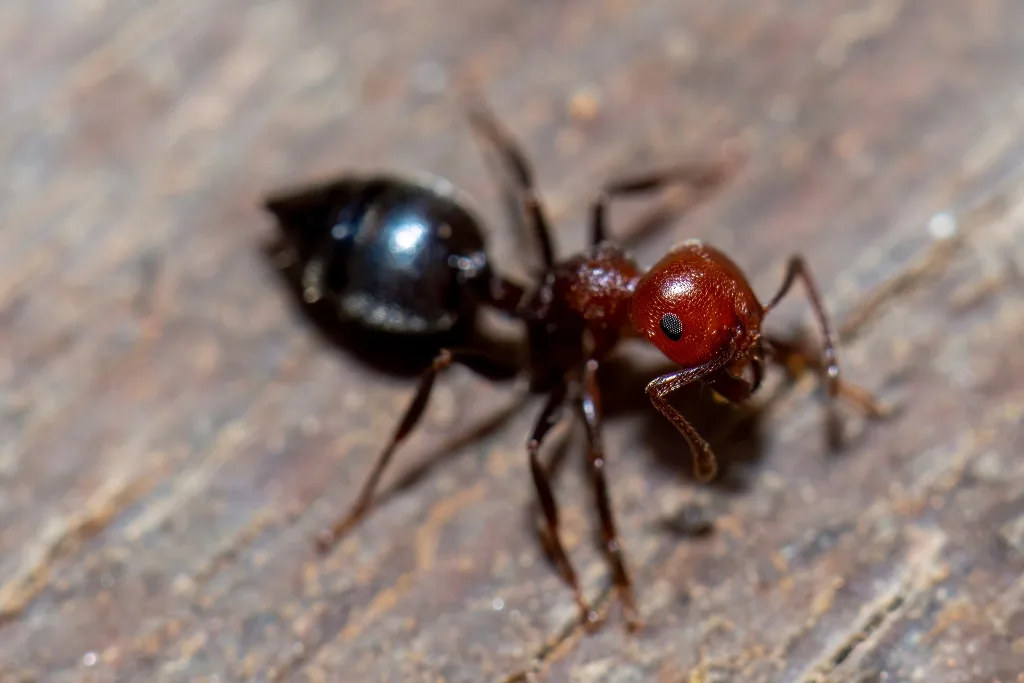
Macro view of an acrobat ant with a reddish-brown head and a shiny black, heart-shaped abdomen resting on rough wood.

Acrobat ants get their name from their ability to raise their abdomen over their head when disturbed (like an acrobat). They are small, about ⅛ inch long, and range in color from light brown to black.  Acrobat ants often nest in moist or decaying wood, similar to how carpenter ants behave. 

These ants can cause minor property damage by hollowing out wood and insulation. They may enter homes through small cracks or openings, particularly around windows and doors.  Signs of an acrobat ant infestation include small piles of wood shavings and a distinct vinegar-like odor when crushed.

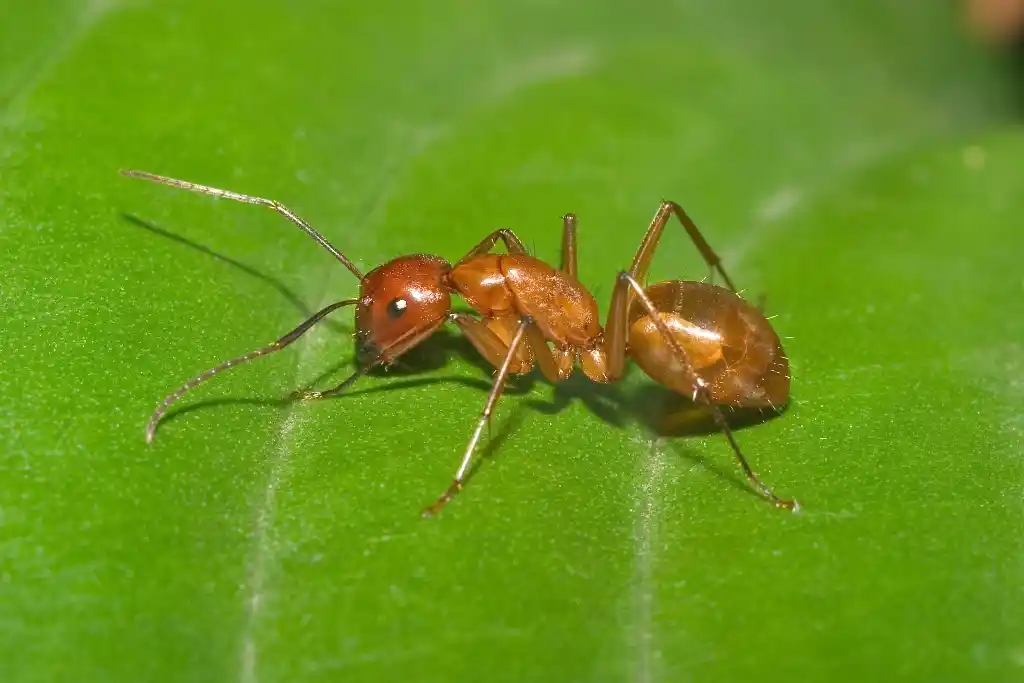
Detailed close-up of a light orange pyramid ant resting on a bright green leaf.

Pyramid ants are named for the pyramid-shaped structure on their thorax. They are small (about ⅛ inch long), and reddish-brown in color.  While not typically harmful to humans or structures, they can become a nuisance when they invade outdoor living spaces. These ants prefer to nest in soil, often creating small crater-like mounds in lawns or gardens. 

Pyramid ants are primarily outdoor pests but may occasionally enter homes in search of food. They are known for their aggressive behavior towards other ant species, which can sometimes help control other ant populations.

Close-up of a shiny little black ant crawling on a vibrant, textured green leaf.

As their name suggests, little black ants are small (typically 1/16 inch long), and jet-black in color.  Little black ants are highly adaptable and can nest both indoors and outdoors. They are attracted to a wide variety of foods, including sweets, proteins, and greasy substances. 

Signs of an infestation include visible trails of tiny black ants, often leading to food sources in kitchens or pantries. While they don’t pose a significant threat to humans or property, they can be a persistent nuisance when they infest homes or outdoor areas.

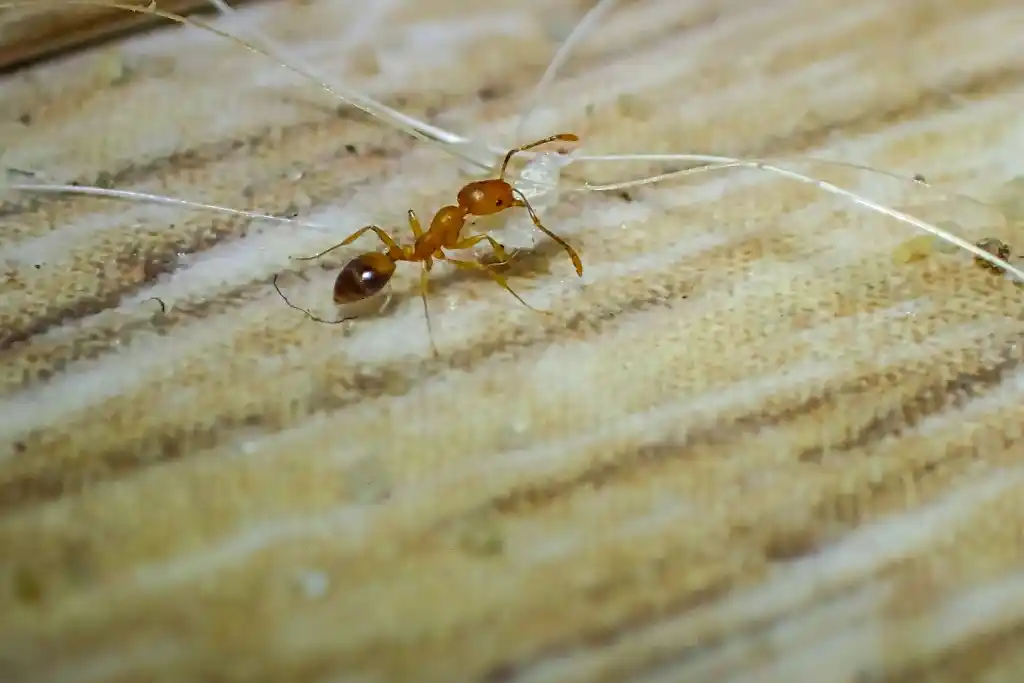
Small, pale-orange pharaoh ant carrying a piece of white material across a textured light wood surface.

They are considered a significant pest in hospitals and food-handling facilities due to their ability to spread disease organisms. Pharaoh ants are extremely small (about 1/16 inch long), and light yellow to reddish-brown in color.  These ants prefer warm, humid environments and often nest in hard-to-reach areas within walls or behind baseboards. 

Pharaoh ants are known for their ability to establish multiple colonies quickly, making them challenging to control.  Signs of an infestation include visible trails of tiny ants, often near moisture sources or food areas.

Close-up of a small yellowish-brown thief ant hanging from the edge of a green leaf.

Thief ants are tiny (usually no more than 1/32 inch long), and pale yellow to light brown in color. They get their name from their habit of nesting close to other ant colonies and stealing their food and brood.  While not directly harmful, they can contaminate food sources in homes. 

Due to their small size, thief ants can easily enter packaged foods. These ants can nest both indoors and outdoors, often in small crevices or wall voids. They are attracted to protein-rich and greasy foods, making kitchens a common target.

Need Help Identifying Ants in Your Home?

Schedule an inspection

How to Prevent These Different Types of Ants

Preventing these ants involves a multi-faceted approach, including:

  • Sealing entry points.
  • Cleaning up spills and other messes promptly.
  • Addressing moisture issues.
  • Bringing in professional ant control.

Our approach to prevention goes beyond the basics, incorporating customized solutions that examine and fortify potential entry points and attractions specific to the ant varieties in your area, guided by our experienced staff. This minimizes immediate infestations and contributes to long-term results, knowing your home is protected against future infestations.

Local Extermination for All Ant Species 

Dealing with ants can be frustrating and time-consuming. We’ve seen many homeowners spend lots of money on store-bought products that don’t solve the problem. DIY methods can lead to ongoing ant issues and more damage to your home. 

The quickest and easiest way to identify and address an ant infestation is with a trusted exterminator like Rocket Pest Control. With over 65 years of pest control experience, our team understands ant behavior and uses targeted treatment strategies based on the species and conditions found at your property. Our goal is to provide reliable, effective solutions that help protect your home from ongoing ant activity.

Get started today with a free service quote! Just give us a call or fill out our contact form here.

Back to Ant Exterminators