How to Wildlife-Proof Your Home in Fall and Winter
Proudly Serving South Carolina | North Carolina | Georgia | Florida
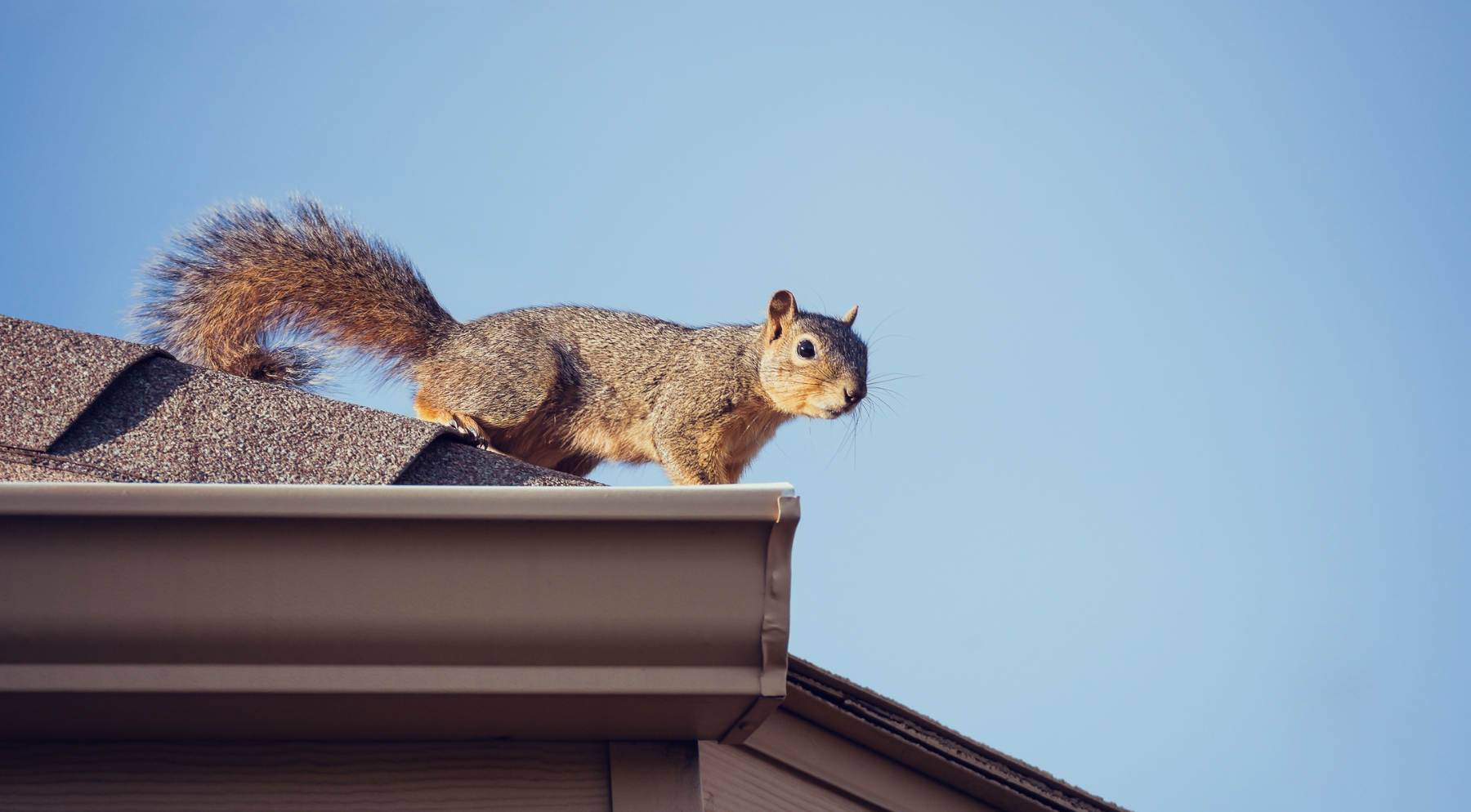
Fall and winter can bring increased wildlife activity around homes as animals look for food, shelter, and protected places to rest. Small gaps around the roofline, foundation, vents, utility lines, and other exterior openings may provide access to attics, crawl spaces, walls, and other areas of the structure.
Wildlife exclusion focuses on finding and securing those vulnerable areas before animals move in. A seasonal inspection can also help identify existing damage or signs that wildlife may already be using part of your home.
Key Takeaways:
- Wildlife and rodents can take advantage of surprisingly small gaps or damaged areas around a home.
- Rooflines, vents, foundations, utility penetrations, attics, and crawl spaces are important areas to inspect.
- Existing wildlife should be removed or properly excluded before active entry points are permanently sealed.
- Professional exclusion can help identify structural vulnerabilities that may be difficult to spot from the ground.
Why Is Wildlife Exclusion Important in Fall and Winter?
As temperatures change, animals such as squirrels, raccoons, rodents, and bats may seek sheltered areas around homes and buildings. Attics, crawl spaces, wall voids, chimneys, and rooflines can provide protection from weather and predators.
Once wildlife gains access, activity may lead to damaged insulation, chewed materials, droppings, nesting debris, odors, or additional structural damage.
Exclusion helps address the openings and conditions that allow animals to enter rather than focusing only on removing the wildlife already inside.
Where Can Wildlife Get Into Your Home?
Wildlife often uses existing gaps, damaged building materials, or unprotected openings rather than creating an entirely new entrance.
| Area | What to Check | Common Concerns |
| Roofline | Soffits, fascia, roof returns, vents, flashing, and chimneys | Squirrels, raccoons, bats, and rodents may use damaged or accessible openings. |
| Foundation | Crawl space vents, foundation gaps, doors, and damaged screening | Rodents and other wildlife may access sheltered areas beneath the home. |
| Utility Openings | Areas around pipes, wiring, HVAC lines, and exterior penetrations | Small gaps may provide access to wall voids or interior spaces. |
| Doors & Garages | Weather stripping, thresholds, garage-door seals, and corners | Worn or damaged seals can create accessible gaps. |
| Attics & Crawl Spaces | Insulation, rafters, joists, vents, and structural seams | Droppings, nesting material, damaged insulation, or tracks may indicate existing activity. |
Wildlife Exclusion Inspection Checklist
A thorough inspection should move around the exterior of the home and then into accessible attic, crawl space, or unfinished areas where wildlife activity may be visible.
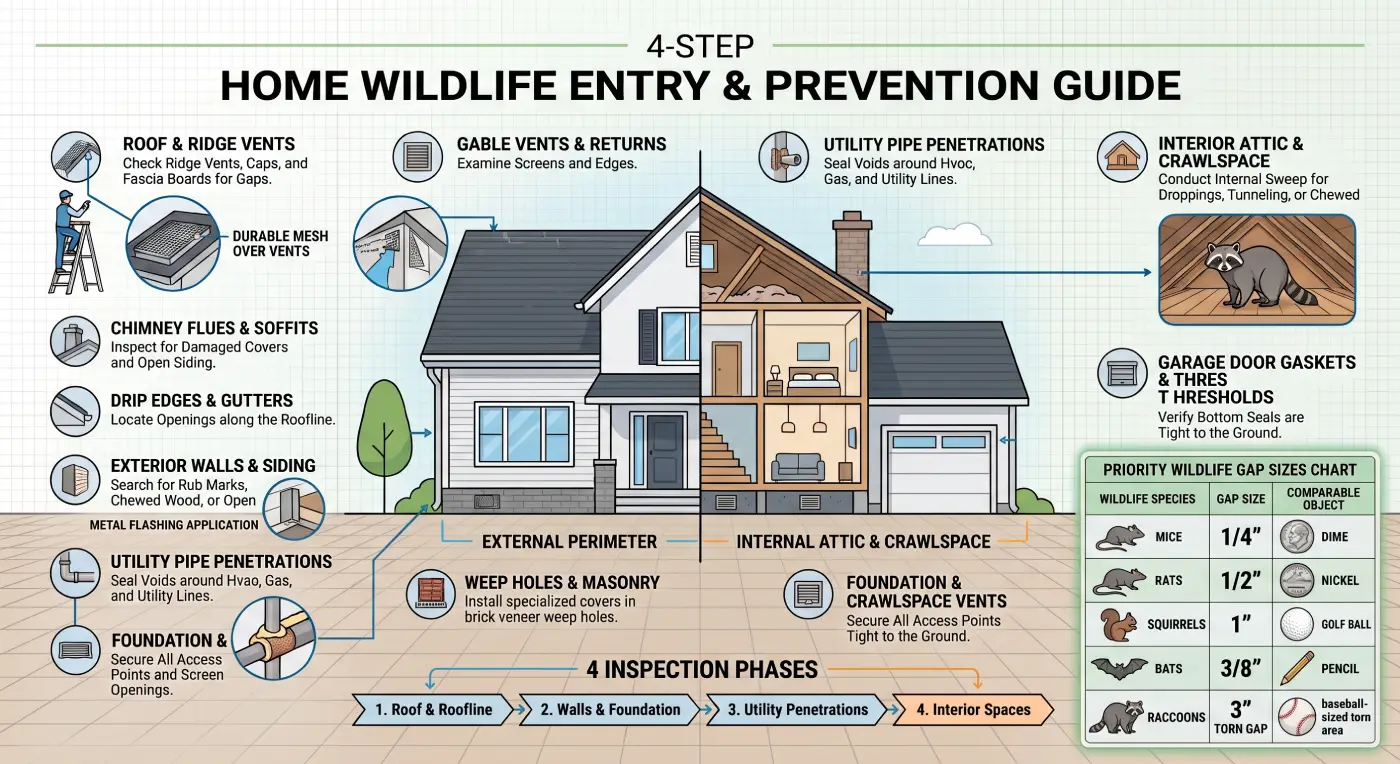
Zone 1: Roofline & Vents
Start with the upper exterior of the home. Rooflines provide many potential access points, especially when vents, soffits, fascia, flashing, or roofing materials are damaged or deteriorating.
- Inspect soffits and fascia: Look for damaged panels, gaps, loose materials, or evidence of chewing.
- Check vents and roof openings: Confirm that gable vents, attic vents, and other openings are properly secured.
- Watch for repeated wildlife activity: Animals frequently traveling along or disappearing into the same roof area may indicate an active entry point.
- Evaluate nearby branches: Tree limbs that reach or overhang the roof may provide easier access for squirrels and other climbing wildlife.
Zone 2: Foundation & Exterior Walls
Next, inspect the lower exterior of the home for openings that may provide access to crawl spaces, wall voids, garages, or other sheltered areas.
- Check crawl space and foundation vents: Look for damaged screening, loose covers, or visible gaps.
- Inspect doors and garage seals: Worn weather stripping or visible light beneath exterior doors can indicate an opening.
- Look for deteriorated materials: Damaged siding, trim, masonry, or other exterior components may create wildlife access points.
Zone 3: Utility Penetrations
Pipes, wires, ducts, and HVAC lines must pass through the exterior of the home, and the areas around these penetrations can become vulnerable as sealants and other materials deteriorate.
- Inspect around plumbing: Check exterior pipes and spigots for gaps where they enter the structure.
- Check HVAC and electrical lines: Look for damaged sealant, missing material, or visible openings around exterior penetrations.
- Repair deteriorated seals: Appropriate repair materials should be selected based on the opening, building material, and wildlife concern.
Zone 4: Attic, Crawl Space & Interior Areas
Interior evidence can help confirm whether wildlife has already gained access to the structure.
Signs to look for include:
- Droppings: Waste concentrated around travel paths or nesting areas.
- Damaged Insulation: Matted, displaced, torn, or contaminated insulation.
- Nesting Material: Leaves, paper, insulation, or other materials gathered into protected areas.
- Chewing or Scratching: Damage to wood, wiring, vents, or stored materials.
- Tracks or Rub Marks: Repeated travel paths may leave visible evidence around openings, beams, or structural seams.
If you find significant droppings, bat guano, or other contaminated materials, avoid disturbing the area until it can be properly evaluated.
Can You Wildlife-Proof Your Home Yourself?
Homeowners can handle some basic prevention tasks, such as replacing worn weather stripping, securing garbage, trimming vegetation, or repairing minor accessible gaps.
Professional exclusion may be appropriate when the problem involves elevated rooflines, active wildlife, inaccessible openings, extensive structural damage, or multiple potential entry points.
A professional wildlife exclusion inspection can also help determine whether an opening is currently being used before it is sealed. Closing an active entry point too early can trap wildlife inside the structure.
What Does Professional Wildlife Exclusion Include?
The exact work depends on the structure and wildlife activity present, but professional exclusion may include:
- Property Inspection: Identifying active wildlife areas, entry points, and structural vulnerabilities.
- Wildlife Removal or Exclusion: Addressing animals already inside before permanent repairs are completed.
- Entry-Point Repairs: Securing accessible gaps, vents, roofline openings, and other vulnerable areas with appropriate materials.
- Prevention Recommendations: Identifying food, shelter, vegetation, or structural conditions that may encourage future wildlife activity.
- Follow-Up When Needed: Confirming exclusion work and monitoring areas where wildlife activity was previously identified.
Bat exclusion and certain other wildlife situations may also be subject to seasonal or species-specific regulations, so timing should be considered before work begins.
Professional Wildlife Exclusion Services
If you’re concerned about animals getting into your attic, crawl space, walls, or other parts of your home, Rocket Pest Control can inspect the property and identify areas that may need removal, repair, or exclusion.
Our wildlife removal and exclusion services are available throughout Florida, Georgia, North Carolina, and South Carolina.
Want to know where wildlife could be getting into your home? Contact Rocket Pest Control today to schedule a wildlife exclusion inspection.
View current rodent and wildlife exclusion specials.
Back to Wildlife Removal Services