
Termite Tenting
Proudly Serving South Carolina | North Carolina | Georgia | Florida
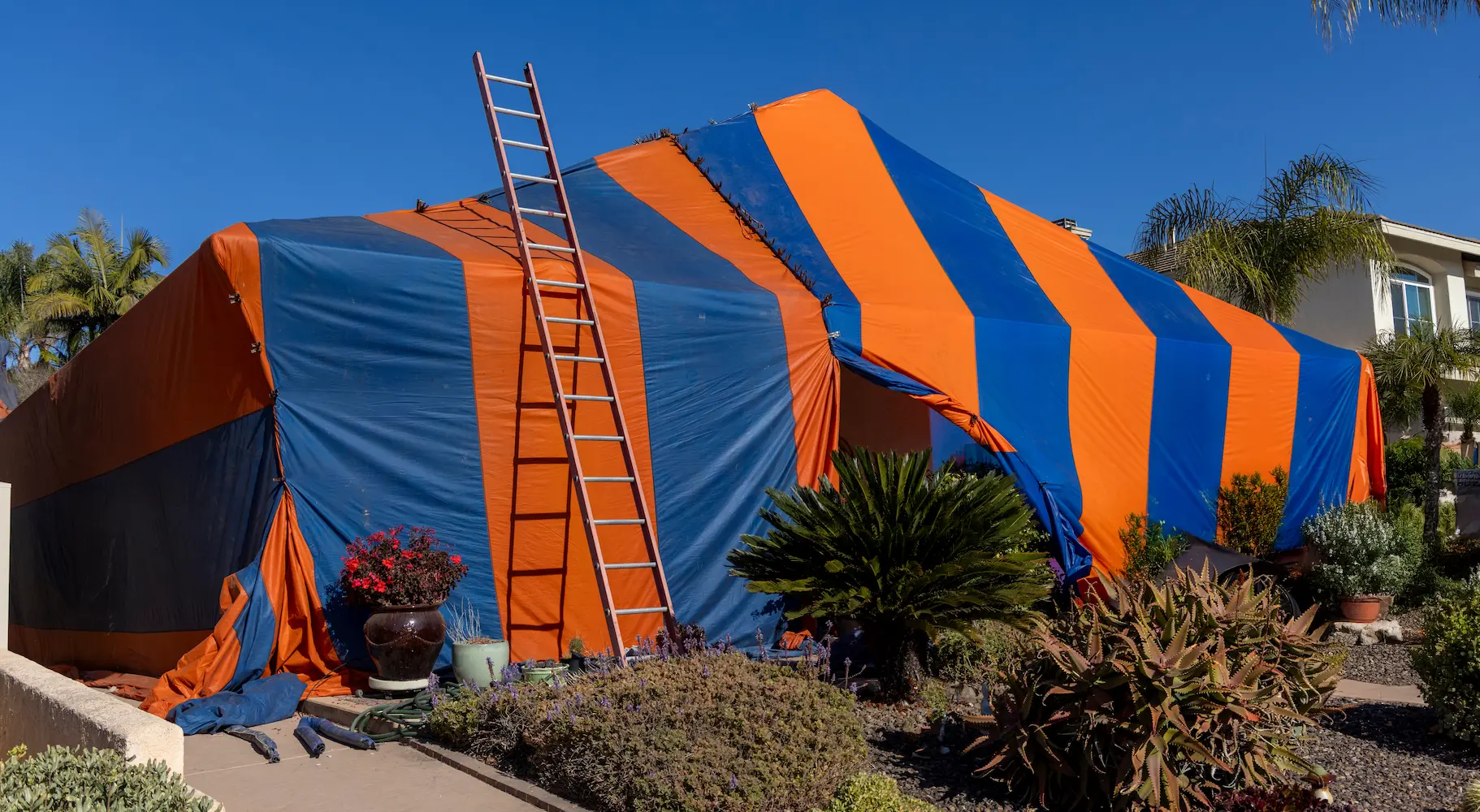
Discovering termites in your home can feel overwhelming. These silent destroyers cause about $5 billion in damages to homes every year. So when you’re dealing with a serious infestation, especially drywood termites, termite tenting may be the most effective solution to protect your investment.
At Rocket Pest Control, we’ve been helping homeowners eliminate termite problems since 1965. Our team of termite control specialists understands how stressful this situation can be, and we’re here to guide you through every step of the process.
What Is Termite Tenting?
Termite tenting is a whole-structure treatment method with fumigation involved. During this process, your entire home is covered with a large tent made of tarps. Once sealed, a professional fumigant is released inside. This gas penetrates every part of your home, including walls, attics, and hard-to-reach spaces where termites hide.
The fumigant reaches areas that other treatments simply cannot access. This makes it especially effective for widespread infestations or when termites have spread throughout multiple areas of your home. It works by disrupting the termites’ ability to breathe and process energy.
Within a few days, the entire termite colony inside your home is eliminated. After treatment, the tent is removed, and your home is aired out until it’s completely safe to re-enter.
When Is Home Tenting for Termites Recommended?
Not every termite problem requires fumigation. Our termite control experts will conduct a thorough inspection to determine the best treatment approach for your specific situation.
However, there are certain cases where termite tenting is the recommended solution:
- Drywood Termite Infestations: Drywood termite fumigation is often the most effective choice for these particular pests. Unlike subterranean termites that live in the soil and enter your home from below, drywood termites live entirely inside the wood they infest. They don’t need contact with soil or moisture, which means they can establish colonies deep within your walls, furniture, and structural wood.
- Severe or Widespread Infestations: When termites have spread to multiple areas of your home, treating each spot individually becomes impractical. Home tenting for termites addresses the entire structure at once, giving you confidence that no colony has been left behind.
- Hard-to-Reach Locations: Termites often infest areas that are difficult or impossible to access with spot treatments. This includes spaces inside walls, beneath flooring, and within roof structures. Termite fumigation penetrates these areas without requiring any drilling or physical access.
- When Other Treatments Haven’t Worked: If you’ve tried other treatment methods without success, termite tenting may be the comprehensive solution you need. Our specialists can assess your situation and determine if fumigation is the right next step.
How to Prepare for Tenting for Termites
We know this part of the process can feel like a lot of work, but our team will provide you with detailed instructions and support every step of the way.
Before Your Scheduled Treatment
The most important part of termite fumigation preparation is making arrangements for your family and pets to stay elsewhere during the process. This typically means two to three nights away from home. The fumigant used during treatment is highly effective against termites but must be completely cleared before anyone returns.
You’ll also need to remove or prepare certain items in your home. All food, medicine, and consumable products need to be either removed from the property or sealed in special protective bags that we can provide. This includes items in your refrigerator, freezer, and pantry. Pet food, plants, and any items you might put in your mouth, like toothbrushes, should also be removed or bagged.
Any living things need to leave the home before treatment begins. This includes all people, pets, and houseplants. If you have fish tanks, our team can advise you on the best way to handle them during the fumigation process.
Preparing Your Property
Our technicians will need clear access around the exterior of your home. This means trimming back any bushes, plants, or tree branches that touch your house. You’ll also want to remove any items stored against the exterior walls.
If you have an attached garage, everything inside will be exposed to the fumigant. Plan accordingly for any items stored there. Vehicles can typically remain in the garage, but you’ll want to leave windows cracked slightly.
Your neighbors should be informed about the upcoming treatment, especially if your homes are close together. Our team can help coordinate any necessary notifications.
What Happens After Termite Tenting?
When you first return, you may want to open additional windows to continue airing out your home. While the fumigant levels will be safe, some homeowners prefer extra ventilation for their own comfort.
Take some time to unpack and properly store any items you sealed or removed during termite fumigation preparation. Check your pantry, refrigerator, and medicine cabinets to make sure everything is back in place.
Termite fumigation is highly effective at eliminating active infestations. The fumigant kills termites at all life stages, including eggs. However, it’s important to understand that fumigation does not leave behind any residual protection. This means your home could potentially be re-infested in the future if preventive measures aren’t taken.
After treatment, you should stop seeing evidence of active termites. No more frass, or termite droppings, should appear. You won’t find new piles of shed wings. The tunnels and damaged areas will remain, but no new damage should occur.
Regular inspections and preventive treatments can help make sure that your home stays termite-free for years to come. Our termite control specialists can discuss ongoing protection options with you. But if you notice any signs of new termite activity after treatment, contact us immediately. While rare, it’s possible for a new colony to establish itself, especially if conducive conditions aren’t addressed.
Click below to contact Rocket Pest for a FREE pest control quote. Start With A Quote On Us
Termite Tenting vs. No-Tent Treatment Options
When No-Tent Treatments May Work
- For localized infestations that haven’t spread throughout your home, spot treatments or localized applications may be effective. These treatments target specific areas where termites are active without requiring you to leave your home.
- Bait systems are another option that works well for subterranean termites. These systems are installed around your property and work by attracting termites to poisoned bait, which they carry back to their colony.
- Liquid treatments applied to the soil around your foundation can create a barrier that prevents subterranean termites from entering. These treatments can be highly effective for the right type of infestation.
Why Tenting May Be the Better Choice
While no-tent options are less disruptive, they have limitations. Spot treatments only work if you can identify and access every infested area. With drywood termites especially, hidden colonies can go undetected and continue causing damage.
For severe infestations, widespread drywood termite problems, or situations where other treatments have failed, tent fumigation for termites provides the thorough solution you need.
Our termite control specialists will always recommend the most appropriate treatment for your situation. We never suggest fumigation when a simpler solution would work just as well. Our goal is to solve your termite problem effectively while minimizing the disruption to your life.
Get Started With a Free Termite Inspection
If you’ve seen signs of termites, or if you’re concerned about potential termite activity in your home, don’t wait. The sooner you address the problem, the better off you’ll be. Termite colonies start small, but as they grow, the damage they cause multiplies. It also becomes much more difficult to eliminate a large infestation than a small one.
Our team will perform a full inspection of your property and provide you with an honest assessment of your situation. If termite tenting is recommended, we’ll walk you through every step of the process, from how to prepare for tenting for termites to what to expect when you return home.
Get your personalized quote today and take the first step toward a home free of termites.