
Wolf Spider Fact Sheet
Type: Spiders

Key Facts: Wolf Spiders
- They’re a fast-moving, ground-hunting spider that doesn’t spin webs to catch prey. Instead, they actively chase down insects using their exceptional eyesight and powerful legs.
- These robust spiders range from ½” to over 1” in body length, with hairy bodies displaying mottled brown, gray, and tan patterns that provide excellent camouflage. Their eight eyes are arranged in three distinctive rows, with two large eyes prominently positioned on top of their head.
- Wolf spiders are found at ground level in burrows, leaf litter, under rocks, woodpiles, and around building foundations. Females are notable for carrying their egg sacs attached to their spinnerets and later transporting hatched spiderlings on their backs.
- They’re widespread throughout the Southeastern U.S. region and thrive in the varied landscapes.
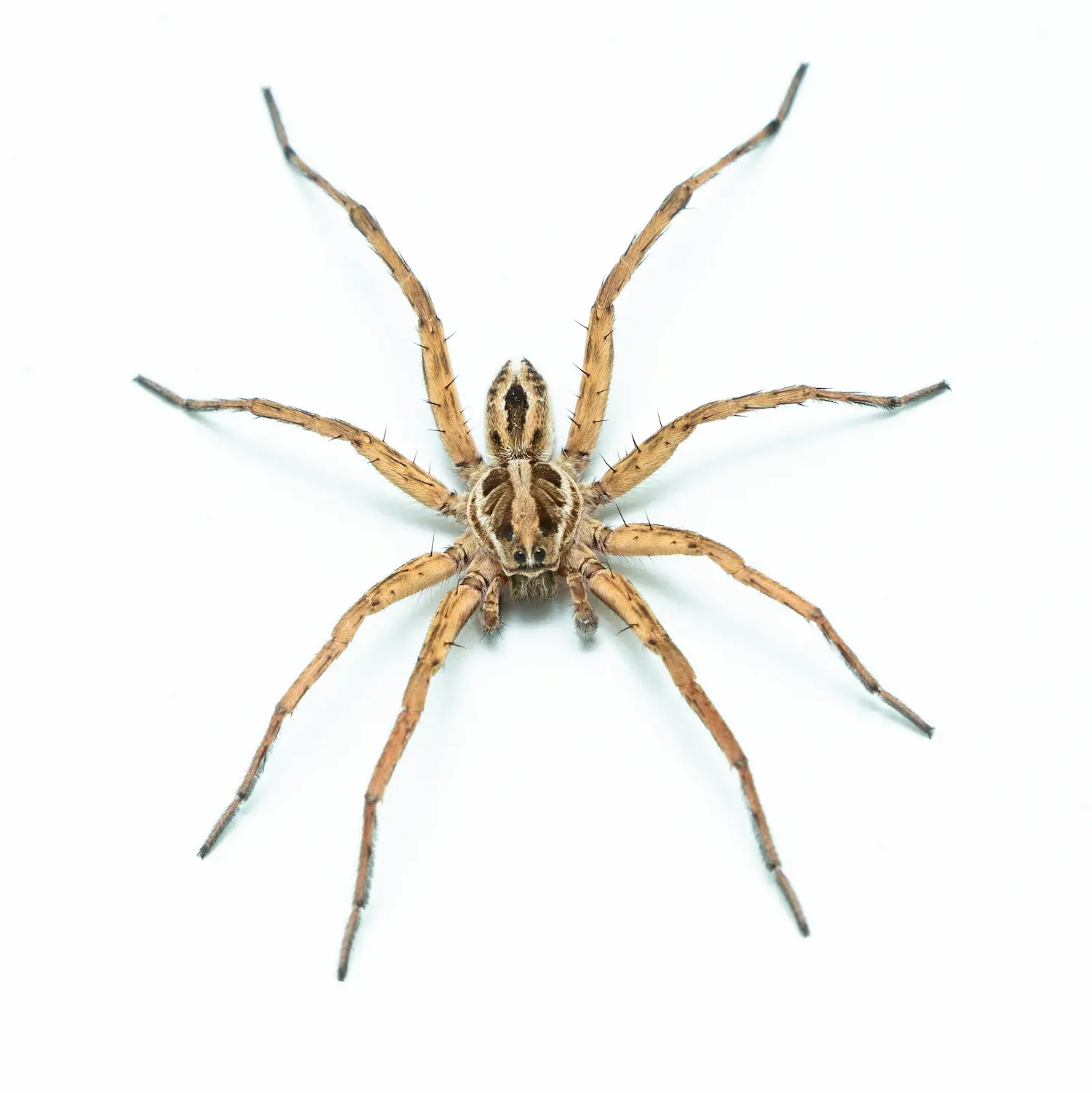
Table of Contents
What to Know About Wolf Spiders in the Southeast U.S.
These eight-legged hunters present unique challenges for local homeowners. They remain active even during cooler months and frequently wander indoors seeking shelter or following prey.
Many residents are startled to encounter these large, fast-moving spiders darting across floors or walls. But dismissing the issue often means continued indoor sightings and growing populations around your home’s exterior.
How Worried Should I Be About Wolf Spiders (on a Scale of 1-10)?
1
2
3
4
5
6
7
8
9
10
About a four out of ten. Wolf spiders look intimidating due to their size and speed, but they’re generally non-aggressive toward humans. They’ll only bite if cornered, handled, or accidentally pressed against skin. You can minimize encounters by being mindful of where you place your hands and feet, especially in cluttered areas.
Here’s what you should be concerned about:
- Painful Bites: While not medically significant for most people, wolf spider bites can cause localized pain, redness, and swelling similar to a bee sting.
- Fear and Anxiety: Their large size and sudden, rapid movements can cause significant distress, particularly for those with arachnophobia.
- Indoor Intrusions: Wolf spiders commonly enter homes through gaps and cracks, especially during temperature extremes or mating season.
- Surprise Encounters: These nocturnal hunters hide in shoes, clothing left on floors, cardboard boxes, and bedding, leading to unexpected and alarming contact.
- Curiosity from Pets: Cats and dogs that investigate or try to catch wolf spiders may receive defensive bites on their nose or paws.
- Other Pests: A wolf spider presence often signals an abundance of insects they’re hunting, suggesting a broader pest issue.
How to Identify Wolf Spiders
How can you confirm you’re dealing with wolf spiders? Look for large, hairy spiders with stout bodies and long, sturdy legs built for running (rather than web-spinning). They also have a distinctive eye arrangement: two large, reflective eyes on top with smaller eyes below.
Wolf spiders are most commonly spotted at ground level, both outdoors and inside your home. Here are some more indicators that wolf spiders have taken up residence:
- Ground Level Sightings: Spotting large spiders running across patios, garage floors, or interior rooms, especially after dark.
- Burrows and Hiding Spots: Small silk-lined holes in the ground, or spiders emerging from beneath debris, mulch, or landscape features.
- Glowing Eyes: Using a flashlight at ground level reveals their eyes glowing back at you, which is a telltale sign of wolf spider activity.
- Egg Sacs: Observing spiders carrying round, cream-colored egg sacs attached to their rear, or dozens of tiny spiderlings riding on the mother’s abdomen.
- Shed Exoskeletons: Finding discarded spider molts in corners, basements, or storage areas indicates ongoing spider activity.
Ready to get started?
Get a free quote today and see why homes and businesses across the Southeast trust Rocket Pest Control.
DIY Ways to Get Rid of Wolf Spiders
Wolf spiders can be challenging to control through DIY approaches since they don’t congregate in webs. Store-bought sprays and traps may eliminate individual spiders you encounter, but they don’t address the outdoor populations constantly migrating toward your home or the underlying insect prey attracting them.
How to Prevent Wolf Spiders
Taking proactive measures can significantly reduce wolf spider activity around your home. While complete elimination is difficult, these steps make your property far less hospitable:
- Reduce ground clutter. Clear away leaf piles, firewood stacks, rocks, and debris near your foundation.
- Manage outdoor lighting. Switch to yellow or sodium vapor bulbs that attract fewer insects, and therefore fewer hunting spiders.
- Eliminate harborage sites. Keep grass trimmed short and reduce dense ground cover near your home’s perimeter.
- Seal entry points. Caulk cracks around windows, doors, utility penetrations, and foundation gaps to block indoor access.
- Address underlying pest issues. Controlling the insects that wolf spiders feed on removes their food source and motivation to stay.
- Schedule routine professional treatments. Consistent professional pest management provides the most reliable long-term spider reduction.

Count on Rocket Pest Control for Wolf Spider Management
Living with wolf spiders doesn’t have to mean dreading every trip to the garage or basement. At Rocket Pest Control, we deliver effective spider elimination services throughout South Carolina, North Carolina, Georgia, and Florida. Our comprehensive approach includes:- Inspection: A detailed evaluation of your property by a licensed pest management professional.
- Treatment: Strategic applications targeting active wolf spider populations and their hiding places.
- Prevention: Integrated measures addressing entry points and conducive conditions.
- Follow-Up: Ongoing monitoring to ensure lasting protection.
Wolf Spider FAQs
Where are wolf spiders found?
Wolf spiders adapt well to the warm, humid conditions found across South Carolina, North Carolina, Georgia, and Florida. They inhabit diverse environments ranging from woodlands and grasslands to suburban yards and residential structures.
Outdoors, they shelter in burrows, beneath stones, inside leaf litter, under logs, and within landscape timbers or mulch beds. When temperatures drop or conditions become unfavorable, they frequently move into garages, basements, crawl spaces, and ground-floor rooms. Unlike web-building spiders, wolf spiders are wandering hunters that may turn up almost anywhere at ground level.
Do wolf spiders bite?
Wolf spiders can bite when threatened, handled, or accidentally trapped against the skin. However, they’re not aggressive and typically attempt to escape rather than attack. Bites most often occur when spiders hide in shoes, clothing, or bedding and are inadvertently pressed or grabbed.
What should I do if I get bitten by a wolf spider?
Clean the bite area thoroughly with soap and water, apply ice wrapped in a cloth to reduce swelling, and take over-the-counter pain relievers if needed. Keep the area clean and watch for signs of infection.
If you experience severe pain, spreading redness, fever, or symptoms suggesting an allergic reaction such as difficulty breathing or facial swelling, seek medical attention promptly.
Are wolf spiders venomous?
Yes, wolf spiders possess venom to subdue prey. However, their venom is not considered medically significant to humans. Bites typically produce mild symptoms (localized pain, redness, and swelling) that resolve within a few days without medical intervention.
Are wolf spiders dangerous?
Wolf spiders are not considered dangerous to humans. While their large size and speed can be frightening, they pose minimal health risks. Bites are uncommon and rarely cause reactions beyond temporary discomfort. People with compromised immune systems or those who develop signs of infection should consult a healthcare provider.
Are wolf spiders nocturnal?
Yes, wolf spiders are primarily active at night when they emerge to hunt. During daylight hours, they typically remain hidden in burrows, beneath objects, or in dark, undisturbed areas. This nocturnal behavior explains why homeowners often encounter them during evening hours.
When are wolf spiders most active?
Wolf spiders remain active throughout much of the year in the Southeast’s mild climate. Activity peaks during spring and fall when temperatures are moderate, and mating occurs. Indoor sightings often increase during autumn as spiders seek warmer shelter.
What do wolf spiders eat?
Wolf spiders are carnivorous predators with voracious appetites. Their diet consists of:
- Ground-dwelling insects like crickets, beetles, and grasshoppers
- Other spiders, including smaller wolf spiders
- Ants and cockroaches
- Various crawling invertebrates
Rather than trapping prey in webs, wolf spiders actively pursue and pounce on their victims, using speed and keen eyesight to hunt effectively at night.
What is the wolf spider life cycle?
Wolf spiders undergo incomplete metamorphosis, hatching from eggs as miniature versions of adults called spiderlings.
Females produce silk egg sacs containing dozens to over a hundred eggs, which they carry attached to their spinnerets until hatching. The spiderlings then climb onto the mother’s back and ride there for several days before dispersing.
Depending on species and conditions, wolf spiders may live one to two years, molting multiple times as they grow.
What are wolf spider behaviors I should look out for?
Wolf spiders are primarily nocturnal hunters that rely on stealth, speed, and excellent vision rather than webs. Their two large forward-facing eyes provide superior depth perception for tracking and ambushing prey.
When threatened, wolf spiders prefer to flee rather than fight, sprinting away with impressive speed. However, females guarding egg sacs or carrying spiderlings may stand their ground. Unlike social insects, wolf spiders are solitary creatures that don’t form colonies.
Why do wolf spiders come inside?
Wolf spiders enter homes while hunting prey, seeking shelter from extreme temperatures, or searching for mates during breeding season. Cracks in foundations, gaps beneath doors, and openings around utilities provide easy access. Indoor environments with insect activity are particularly attractive to these opportunistic hunters.