
What Attracts Spiders to Your House?
Proudly Serving South Carolina | North Carolina | Georgia | Florida
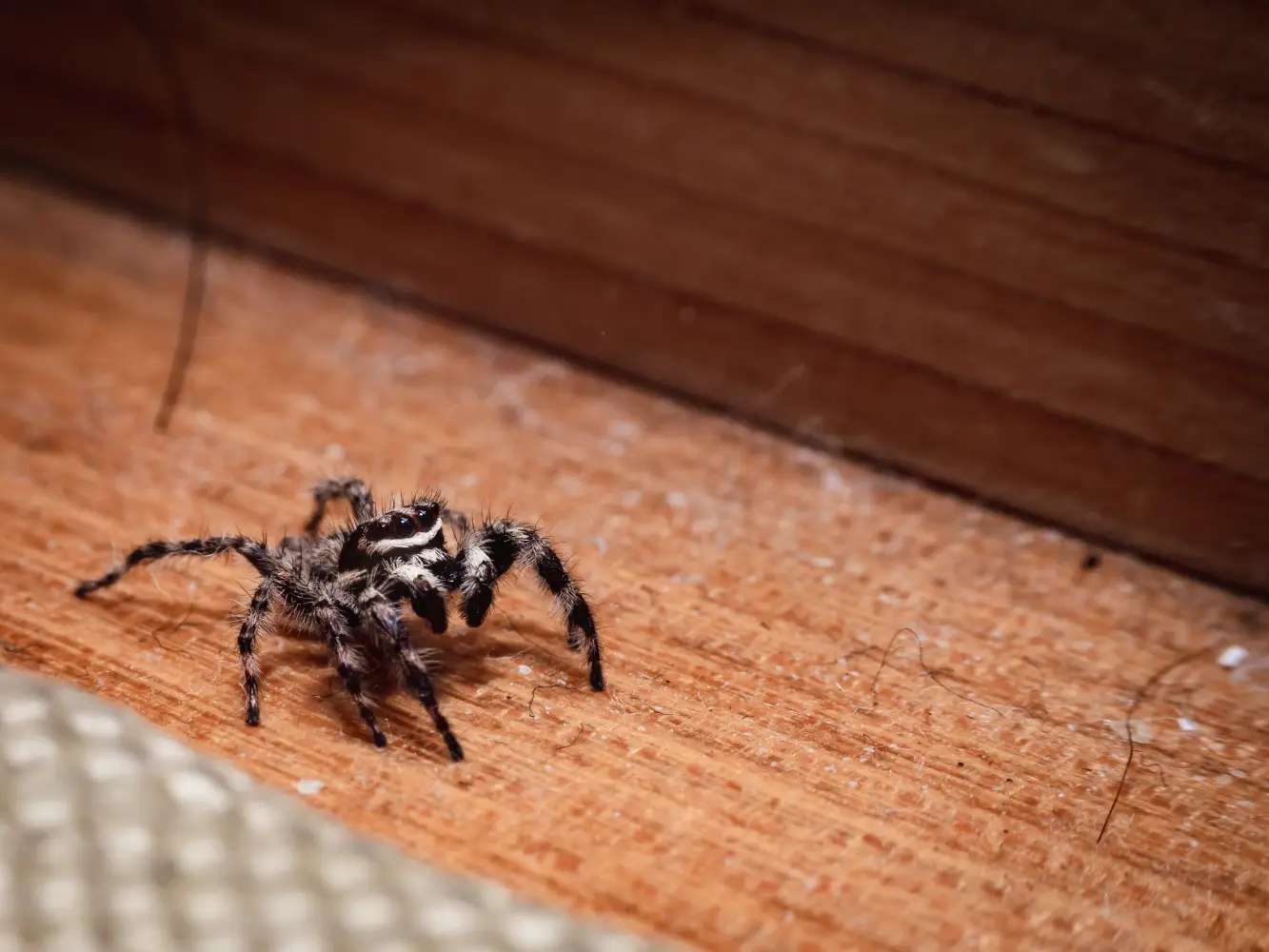
Some houses in Southeastern United States are absolutely crawling with spiders; some houses don’t have any. Most houses are somewhere in between, with a few spiders here and there, and those numbers may fluctuate throughout the year due to seasonality and other factors—especially with our heavy Southern humidity. The truth is, no matter how many spiders are in your house, there are reasons why.
So, why do you have spiders in your house? Spiders, like all pests, require three things:
- Food
- Moisture
- Shelter
The more food, moisture, and shelter your home has to offer, the more spiders you’re likely to see. On the flip side, if you can eliminate food, moisture, and shelter, you can eliminate spiders, too.
Why Do You Have Spiders in Your House?
Spiders don’t just show up for no reason. If you find spiders in your house, you can be sure they’ve decided to move in because they have access to the food, moisture, and shelter they need to survive. In the lush environment of the Southeast, our homes often provide an unintentional sanctuary that meets every one of their biological needs.
Let’s break down exactly what these resources are for spiders and where they find them.
1. Food Is the Main Attraction for Spiders
If a new restaurant serving all of your favorite foods opened up right here in Southeastern United States, of course you’d want to check it out. The same is true of spiders. If they know your home is serving an all-you-can-eat buffet of their favorite foods, it shouldn’t be surprising when they show up.
When we ask what attracts spiders, we are really asking what attracts their dinner. In the pest control world, we often refer to spiders as a “secondary infestation.” They are the predators that follow the prey.
If you have spiders, it is almost a guarantee that you have a primary infestation of other insects — like ants, flies, or beetles — that are keeping the spiders fed.
Can Spiders Smell Food?
While spiders don’t have noses in the traditional sense, they are incredibly sensitive to their environment. They “smell” and “taste” through specialized sensory hairs on their legs and pedipalps (the small, arm-like structures near their mouths). They can detect chemical signatures left behind by other insects or even the pheromones of potential mates. If a corner of your basement is crawling with silverfish, a spider can “sense” that bounty and will build its web accordingly.
Do Spiders Have a Favorite Type of Food?
Spiders are generally opportunistic — they eat what they can catch — but they certainly have preferences. Most common household spiders in Southeastern United States crave soft-bodied insects. Their “favorite foods” typically includes:
- Flies and Mosquitoes: Especially for orb-weavers and cobweb spiders.
- Moths: A high-protein favorite.
- Cockroaches and Crickets: These are primary targets for larger, ground-dwelling spiders like Wolf Spiders.
2. Even a Small Amount of Moisture Is Enough
In the Southeast, we know that moisture is just a part of life, but for a spider, it’s a vital resource. While spiders actually get a significant portion of their hydration from the fluids of their prey, many species require environmental moisture for other life-critical purposes, such as hatching their egg sacs without them drying out.
What Do Spiders Use Moisture For?
Beyond simple hydration, moisture dictates where a spider can physically exist. Many species, like the common Cellar Spider, have thin exoskeletons that lose water rapidly. They use moisture to keep their bodies supple and to ensure their egg sacs remain viable. High-humidity areas like crawl spaces, under-sink cabinets, and laundry rooms act as “rehydration stations” for spiders.
What Happens to Spiders If They Can’t Find Moisture?
If a home becomes too arid, spiders face a choice: migrate or perish. Without adequate moisture, a spider’s joints can become brittle, and their ability to produce silk can be compromised. This is why you often find spiders in your bathroom or kitchen—they aren’t looking for a bath; they are drawn to the microscopic droplets and humid air trapped in those rooms.
3. A Safe and Comfortable Place to Shelter
Your home is full of quiet, low-traffic areas where spiders can establish nests and live peacefully, shielded from the birds and larger predators of the outdoors. Once a spider finds its way into your house and finds a comfortable place to make its home, they are unlikely to leave on their own.
The key factor here is access. If spiders can get into your home, they will find shelter. This is why sealing the perimeter of your house is the cornerstone of any long-term prevention plan.
Do Spiders Prefer Corners?
It isn’t just a cliché—spiders genuinely love corners. From a structural standpoint, a corner provides the perfect “anchor points” for a web, allowing the spider to create a 3D trap with minimal effort. Furthermore, corners are usually the most undisturbed parts of a room, providing the vibration-sensitive spider with a quiet place to wait for a meal.
How Do You Make Your Basement/Attic/Garage Less Conducive to Spiders?
These areas are often “spider heaven” because they are dark and full of storage. To make them less attractive:
- Swap Cardboard for Plastic: Spiders love the nooks and crannies of corrugated cardboard. Sealed plastic bins are much less inviting.
- De-clutter: Reducing the number of items on the floor removes the “caves” that ground spiders love.
- Dust Regularly: Even if you don’t see a spider, removing old webs and dust discourages them from re-settling in that spot.
Other Factors That Attract Spiders
While food, water, and shelter are the “Big Three,” a few other environmental cues can answer the question of what attracts spiders to your house:
- Exterior Lighting: Although spiders are not attracted to light, their favorite food, insects, will gather around outdoor lights. Making sure to turn off outdoor lights, especially at night, will help keep insects and spiders away.
- Vegetation Against the Foundation: Heavy mulch or bushes touching your siding provide a “green bridge” for spiders to walk right into your home.
- Mating Season: In the late summer and fall, male spiders often wander into homes not for food, but looking for females.
- Firewood Storage: Stacking wood against the house is like inviting a spider colony to live on your doorstep.
- Weather: Inclement weather such as rain or cold can motivate spiders to seek out warmer shelter, like your house.
Where Do Spiders Live Before They Come into Your House?
Before they make the leap into your living room, spiders are usually thriving just a few feet away in areas that include:
- Eaves and Soffits: High, protected areas under your roofline.
- Crawl Spaces: The damp, dark underside of your home is a spider’s paradise.
- Landscaping Rocks and Woodpiles: These provide the cool, dark crevices they crave during the heat of a Southeastern United States afternoon.
- Hollow Fences: Vinyl or wooden fences often have gaps where spiders can hide during the day.
How to Prevent Spiders in Your Home
One of the best ways to prevent spiders in your home is to understand what attracts them, and work backwards from there, eliminating all of the possible attractants systematically. Instead of just chasing spiders with a vacuum, work to eliminate the reasons they are there in the first place.
- Seal Your Exterior Fully: Use silicone-based caulk to seal gaps around plumbing, wires, and windows.
- Manage Your Lighting: Switch to yellow “bug bulbs” for exterior lighting to reduce the number of flying insects (spider food) drawn to your home.
- Humidity Control: Use dehumidifiers in basements or crawl spaces to make the environment less hospitable.
- Professional Perimeter Treatments: A professional barrier around the foundation of your home can stop spiders before they ever cross the threshold.
Get Rid of Spiders Quickly and Easily
Understanding why spiders are in your home is the first step toward getting rid of spiders. However, once an infestation has taken hold—especially in our active Southeastern climate—DIY sprays and store-bought traps often fail to reach the source.
At Rocket Pest Control, we don’t just clear away the webs; we address the food, moisture, and access points that brought the spiders there to begin with. We are proud to be the leading experts in dependable spider control services in Southeastern United States, providing customized solutions that keep your home yours alone.
Ready to reclaim your home? Call or email us today to schedule your hassle-free service.
Back to Spider Control