
Flea Facts & Identification
Type: Fleas

Key Takeaways
- Fleas are tiny parasites known to bite cats, dogs, and even people. But they’re more than a simple annoyance for your pets. They are remarkably hardy, capable of overrunning a home quickly, and will readily bite human residents.
- Their bites can trigger significant issues, ranging from intense itching and allergic dermatitis to the transmission of tapeworms and other serious illnesses.
- Just a few fleas dropped in your yard by roaming wildlife or stray cats can spiral into a massive infestation within days. A single female can produce 50 eggs daily, depositing larvae deep within your carpets and furniture before you even spot an adult.
- The humid, warm environment across our region allows fleas to remain active throughout the year. If you or your animals are dealing with constant scratching or mystery bites, it is highly probable you have a flea infestation.
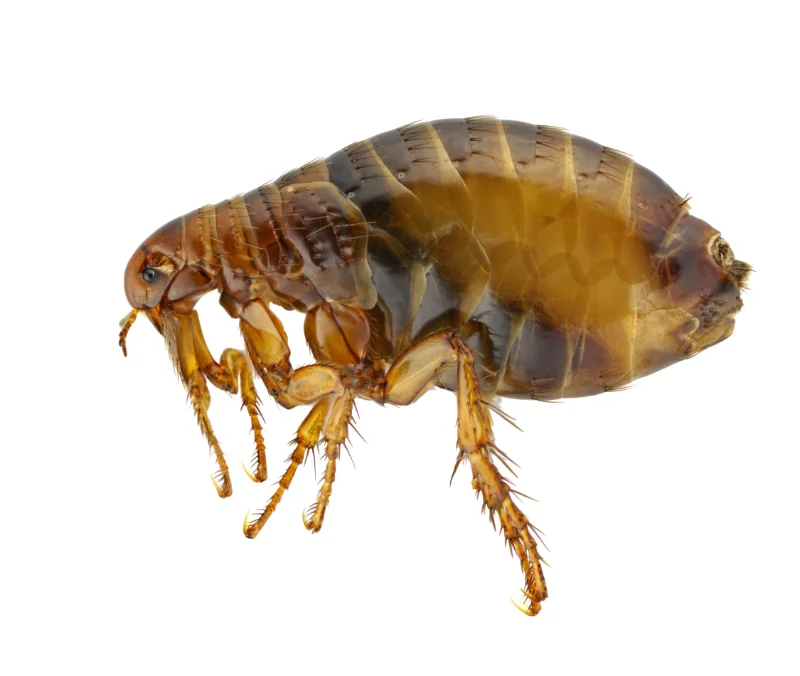
Table of Contents
What to Know About Fleas in the Southeast
Fleas are a constant concern for homeowners in Southeastern United States. Unlike northern states where a cold snap might offer a temporary reprieve, our local climate serves as an ideal incubator, allowing fleas to persist and surface at any time of year.
It is a mistake to believe that fleas only target “untidy” residences. In truth, these parasites are often carried into the most well-kept yards by wildlife like opossums, raccoons, or squirrels. Once they are in your lawn, a simple trip to get the mail is enough for a flea to latch onto your pant leg or your pet’s coat and enter your home.
How Concerned Should You Be About Fleas (on a 1-10 Scale)?
1
2
3
4
5
6
7
8
9
10
Approximately, an 8. While fleas do not cause property damage and their bites aren’t painful, they cause significant physical distress and are notoriously difficult to manage with DIY methods. This combination of factors mean they’re one of the most frustrating pest problems you can deal with.
Also, keep in mind that for every adult you see, nearly 95% of the local population is still developing in the form of eggs, larvae, or pupae.
Major risks of an active infestation include:
- Medical Complications: Scratching at flea bites can lead to secondary skin infections. Furthermore, fleas are known to spread Typhus and Bartonella (often called cat scratch disease).
- Animal Wellness: Severe cases can lead to anemia in young puppies or kittens and serve as the primary source of tapeworms.
- Rapid Breeding: Their life cycle moves with incredible speed; they can lay hundreds of eggs in a week, meaning a minor problem becomes a crisis faster than almost any other pest.
- Resistant to Treatments: Fleas are resilient. The pupae stage is shielded by a cocoon that resists most standard retail sprays and over-the-counter treatments.
How to Identify Fleas
These reddish-brown insects are small — roughly 1.5 to 3 mm in length. While they lack wings, they possess incredibly strong hind legs used to spring onto passing hosts. Fleas are often described as looking like “jumping grains of pepper.”
Because they are so small, you will likely observe the symptoms of their presence before you see the insects themselves. Watch for these specific indicators:
- “Flea Dirt”: This looks like ordinary soil but is actually the pest’s waste (digested blood). You’ll find these black specks on pet bedding or skin; if you place a speck on a damp white paper towel, it will leave a red stain.
- Distressed Pets: Pay attention to your animals’ behavior. If they are scratching incessantly, biting at the base of their tail, or developing “hotspots” and scabs, fleas are the likely culprit.
- Bites on People: On humans, bites typically appear as small, itchy red welts, most frequently clustered around the ankles and shins.
Ready to get started?
Get a free quote today and see why homes and businesses across the Southeast trust Rocket Pest Control.
How to Get Rid of Fleas
To successfully eliminate an infestation, you must coordinate your efforts across several fronts simultaneously. You cannot simply treat the pet; you must also address the interior of the home and the exterior yard. Failure to treat all three areas usually results in a recurring cycle of infestation.
Retail “bug bombs” and hardware store products often fail because they cannot reach the larvae hidden deep in upholstery or carpet fibers. To truly clear your home, we suggest contacting a professional flea exterminator.
>> Learn more about how to get fleas out of your carpet.
Can You Prevent Fleas?
Eliminating and preventing fleas from the environment is a challenge because wildlife can always reintroduce them to your property. However, you can significantly reduce your vulnerability by following these steps:
- Maintain Your Landscape: Keep your lawn mowed short and remove piles of leaves. These damp, shaded areas are where fleas prefer to hide.
- Consistent Pet Care: Work with your veterinarian to keep your pets on a year-round preventative medication.
- Diligent Vacuuming: A high-powered vacuum can pull up to 90% of eggs from your rugs. Always empty the debris into a bin outside immediately after finishing.
- Preventing Wildlife: Make your yard less inviting to rodents and raccoons. Secure your decks and crawl spaces to prevent these carriers from nesting near your home.
Call Rocket Pest Control for Flea Control in Southeastern United States
Dealing with fleas can be an exhausting ordeal of cleaning and discomfort, but you do not have to manage it alone. At Rocket Pest Control, we provide specialized flea control in Southeastern United States designed to interrupt the breeding cycle and restore peace to your household.
Our professional process involves:
- Inspection: We pinpoint the specific “hotspots” in your yard and home where larvae are maturing.
- Targeted Treatments: We utilize professional-grade products that eliminate both adult fleas and their developing offspring.
- Expert Recommendations: We will provide you with a sensible, long-term strategy to keep your home and pets protected in the future.
If you are ready to reclaim your comfort, contact us today for an inspection. Let’s get your home back to normal.

Flea FAQs
Why do I have fleas if I don't have pets?
You don’t need a pet to get fleas – this is a common misunderstanding. Local wildlife can easily drop fleas in your yard, where they can jump onto your clothes or enter through a screen. Furthermore, flea pupae can lie dormant in floorboards for months, “waking up” when they feel the vibrations of a new human occupant in a home.
Can fleas live in my hair?
While there is a species known as the “human flea,” it is quite rare in our part of the country. The fleas common to North Carolina, South Carolina, Georgia, and Florida prefer the thick fur of dogs and cats and won’t live in human hair, though they will certainly bite you.
Do fleas die off in the winter?
In colder climates, a hard freeze can kill outdoor populations. However, in our region, it rarely stays cold enough long enough to act as a natural reset. Once they enter your climate-controlled home, they can thrive 365 days a year.
Why am I seeing more fleas after I vacuumed?
This is a well known phenomenon and a standard biological response. The vibration and warmth of the vacuum mimic a host, encouraging “pre-emergent” fleas to exit their protective cocoons. This is actually helpful, as it brings them out where our professional treatments can reach them more effectively.
Are flea bites dangerous to my family?
The primary risk for most is a skin infection from scratching. However, fleas are vectors for several diseases and can pass tapeworms to pets or small children if an insect is accidentally swallowed. Some people also suffer from Flea Allergy Dermatitis, where one bite triggers a severe reaction.
What should I do if I see a flea today?
Begin by washing all pet bedding in the hottest water possible and vacuuming every rug and sofa. Then, contact Rocket Pest Control to arrange a professional inspection before the population has a chance to double again.