
American vs German Cockroaches: What’s the Difference?
Proudly Serving South Carolina | North Carolina | Georgia | Florida
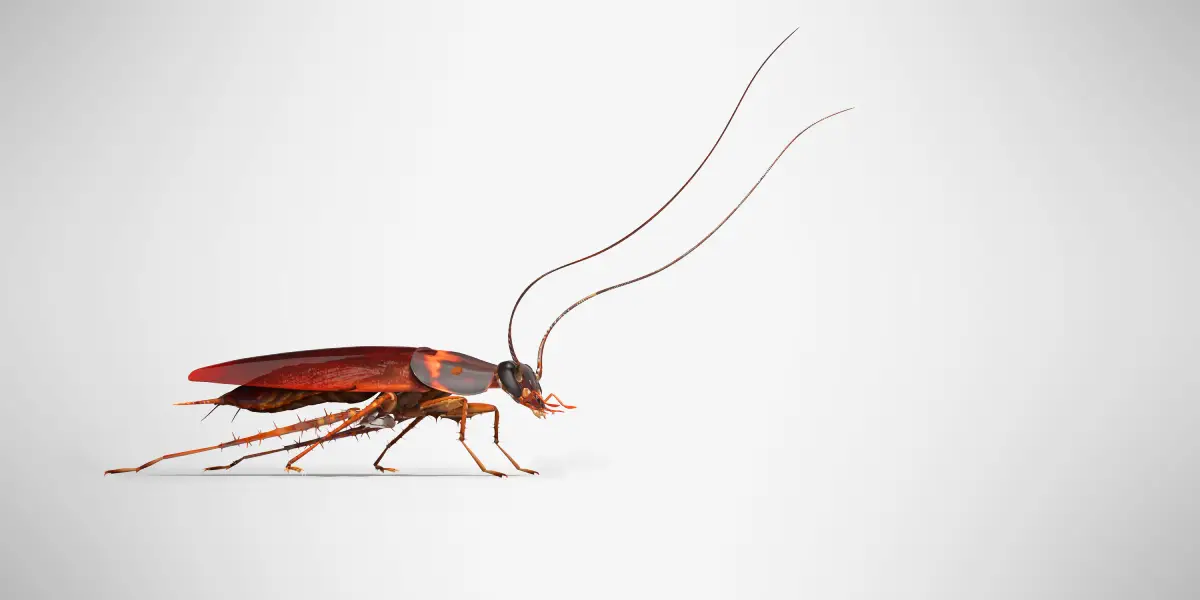
American and German cockroaches are two common cockroach species found in and around homes and businesses throughout the Southeast. Although they can both become unwanted pests, they differ significantly in size, appearance, habitat, and how they typically get inside.
The easiest difference to spot is size: American cockroaches are much larger, while German cockroaches are small and typically found indoors.
American vs German Cockroaches: Quick Comparison
| Feature | American Cockroach | German Cockroach |
| Size | Approximately 1½ to 2 inches long. | Approximately ½ inch long. |
| Color | Reddish-brown with a lighter yellowish area behind the head. | Light brown to tan with two dark parallel stripes behind the head. |
| Preferred Habitat | Warm, damp areas indoors or outdoors, including drains, basements, crawl spaces, and utility areas. | Primarily indoor environments, especially kitchens, bathrooms, appliances, and other warm areas near food and moisture. |
| How They Get Inside | May enter through cracks, gaps, drains, utility openings, or other exterior access points. | Often introduced through boxes, bags, furniture, appliances, or other items moved between locations. |
| Flight | Adults have wings and may glide or fly short distances in warm conditions. | Adults have wings but rarely fly. |
| Infestation Concern | Individual cockroaches may wander indoors, although established populations can occur when suitable conditions are present. | Indoor sightings commonly indicate an established infestation that may spread quickly without treatment. |
How to Identify an American Cockroach
American cockroaches are among the largest cockroach species commonly encountered around buildings. Adults are reddish-brown and usually have a lighter yellowish or tan marking behind the head.
They prefer warm, damp environments and may be found around drains, crawl spaces, basements, sewers, utility areas, landscaping, or other locations with access to moisture and organic material.
American cockroaches may enter buildings in search of food, water, or shelter, so seeing one indoors does not always mean there is a large indoor infestation.
How to Identify a German Cockroach
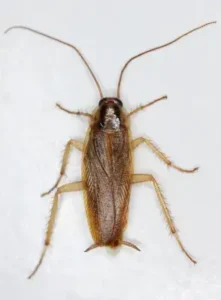
Close-up of a German cockroach showing the two dark stripes behind the head.
German cockroaches are much smaller than American cockroaches and are usually light brown or tan. Their most recognizable feature is a pair of dark parallel stripes running down the area directly behind the head.
Unlike American cockroaches, German cockroaches are strongly associated with indoor environments. They commonly hide near food, warmth, and moisture in kitchens, bathrooms, cabinets, appliances, and other protected areas.
German cockroaches reproduce quickly, so repeated sightings or cockroaches seen during the daytime can indicate significant activity nearby.
Which Is More Difficult to Control?
Both species can create sanitation concerns, but German cockroach infestations are often more difficult to manage because they reproduce quickly, remain primarily indoors, and may develop resistance to some commonly used control products.
American cockroach problems may sometimes be reduced by correcting moisture issues and sealing exterior entry points, while German cockroach infestations typically require more targeted treatment of indoor hiding and breeding areas.
Regardless of the species, cockroaches can contaminate food and surfaces as they move through a property, and cockroach allergens may contribute to allergy and asthma symptoms for some people. Learn more about cockroach health and sanitation concerns.
What Should You Do if You Find Cockroaches?
Start by identifying which cockroach species is present and looking for conditions that may be supporting the activity.
- Reduce food sources: Clean up crumbs and spills and store food securely.
- Address moisture: Repair leaks and reduce standing water or excess humidity.
- Seal entry points: Close accessible gaps around doors, plumbing lines, utility openings, and foundations.
- Monitor activity: Repeated sightings can help indicate where cockroaches are hiding or entering.
- Consider professional treatment: Recurring or widespread activity, especially involving German cockroaches, may require a targeted professional approach.
Rocket Pest Control provides professional cockroach control across South Carolina, North Carolina, Georgia, and Florida. Our technicians can identify the species, evaluate the extent of the activity, and recommend treatment based on the conditions present.
Need help identifying or controlling cockroaches? Contact Rocket Pest Control today for a free quote.